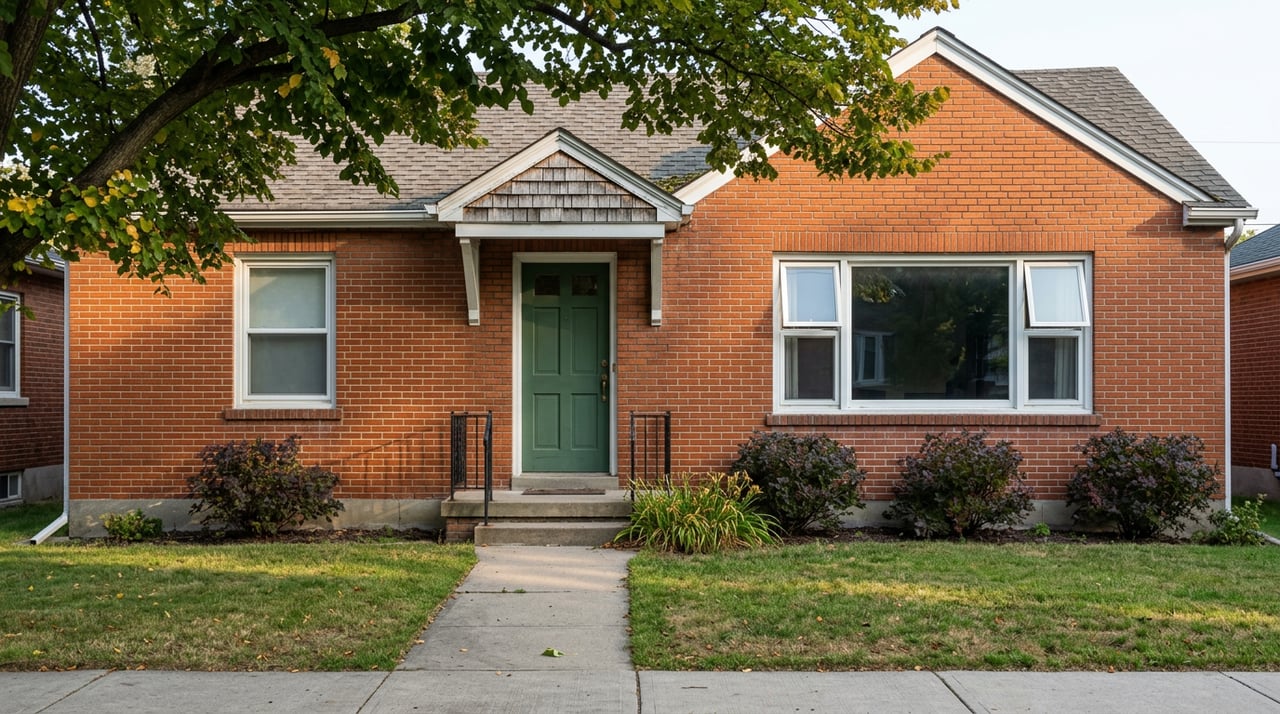
Picture two 1950s bungalows sitting three doors apart on the same street in Killarney-Glengarry. Same era, same lot width, same lane access. A year ago, both would have been marketed the same way: tear-down candidates with rowhouse potential, priced closer to $500,000 for the dirt and the location than for the house sitting on it. Today, one of those lots can still become a four-unit rowhouse. The other cannot, not without the owner filing a fresh application and waiting through a public hearing process that didn't exist for either of them twelve months ago.
That split isn't hypothetical. It's the direct result of a zoning reversal that took effect across Calgary on August 4, 2026, and it means the old shorthand for evaluating inner-city lots in communities like Renfrew, Killarney-Glengarry, and Winston Heights/Mountview no longer works the way it used to. If you're comparing neighborhoods right now, the thing that actually determines what a lot is worth isn't the neighborhood's reputation for infill activity. It's a permit filing date most buyers never think to ask about.
What changed on August 4
In August 2024, the City of Calgary converted most established residential lots citywide to R-CG, the Residential Grade-Oriented Infill designation. That single change let a homeowner or investor apply directly for a development permit to build rowhouses, fourplexes, or townhomes, skipping the land use redesignation step that used to add months and public hearings to any redevelopment plan.
Two years and one municipal election later, council reversed course. Following a public hearing on March 23, 2026, and a 12-3 council vote on April 8, 2026, the repeal took effect on August 4, 2026. According to the City's own planning documents, that decision returned roughly 306,000 parcels to whatever zoning they carried before the 2024 change, typically R-C1 or R-C2, which allow single or two-family homes but not rowhouses or fourplexes as of right. Only about 3,300 parcels citywide kept their R-CG designation, protected by exemption rules built into the repeal bylaw.
That's the number worth sitting with. Out of every lot that gained multiplex rights in 2024, roughly 99 percent lost them again in 2026. The 1 percent that didn't are the ones that happened to have the right paperwork filed by the right date.
Why neighborhood reputation stopped being a reliable signal
Killarney-Glengarry has spent the past few years as one of Calgary's most active infill markets, the kind of community where a buyer expects to see teardown listings advertised alongside finished multiplex product. The math behind that reputation is real: original 1950s bungalows in the community have been selling in the $450,000 to $550,000 range, while finished four-unit infill builds on the same footprint have reached $1 million to $1.5 million or more. That spread is what has made the community a magnet for builders and a talking point for anyone comparing Calgary's inner-city neighborhoods.
Here's the problem with using that spread to judge any specific lot today. The $1 million-plus outcome only applies to a parcel that can still legally become a four-unit building. After August 4, that's no longer most of them, even in a community with Killarney-Glengarry's infill track record. A bungalow on that same street might still be zoned R-C2, worth roughly what the house itself commands, or it might be one of the roughly 3,300 citywide parcels that kept R-CG and genuinely does carry the redevelopment premium. Renfrew and Winston Heights/Mountview, both regularly cited alongside Killarney-Glengarry as inner-city infill communities, face the identical split. The community's overall reputation tells you what's possible somewhere on the street. It tells you nothing about the specific address you're standing in front of.
If you own an older bungalow-era lot in one of these communities and you've heard whispers of "redevelopment value" attached to it, don't take that as settled. Ask specifically whether your parcel is one of the ones that kept R-CG, or whether that value disappeared on August 4 along with everyone else's.
What actually keeps a lot's redevelopment rights
The repeal bylaw didn't leave grandfathering to chance. A parcel kept its R-CG designation, and the multiplex rights that come with it, only if one of three things was true before the cutoff:
- It already had an approved development permit, subdivision application, or building permit under R-CG, R-G, or H-GO zoning
- It was included in a submitted application for one of those permit types before the amending bylaw's first reading
- It received an applicant-initiated land use redesignation approved by council sometime after August 6, 2024
Everything else reverted. That means a homeowner who talked to a builder, got a concept drawing, and planned to file "soon" is in the same position as someone who never considered redevelopment at all. Intent didn't count. A dated, submitted application did.
Even the lots that kept R-CG are being asked to do less
Keeping R-CG designation after August 4 doesn't mean keeping every rule that came with it in 2024. A proposal to bar rowhouses and townhouses from mid-block parcels, restricting them to corner lots only, was debated extensively during the hearing process. The Calgary Inner City Builders Association argued that restriction would have made too many infill projects financially unworkable, and council ultimately deferred it rather than enacting it on August 4. Eligible R-CG lots can still build rowhouses regardless of mid-block or corner position for now, but that question isn't closed. It has been folded into Calgary's broader Zoning Bylaw rewrite, the document intended to eventually replace the current Land Use Bylaw altogether, along with a related proposal on contextual front setbacks.
Council was also weighing a further reduction to R-CG's maximum density, from 75 units per hectare down to 60, with that question teed up for the July 21, 2026 public hearing. Separately, the same industry group estimated that reducing a standard lot's unit count from four to three, a scenario raised during the debate over R-CG's future, could add roughly $143,000 in per-unit cost for the eventual buyer once the same fixed construction costs get spread across fewer homes. Whatever direction council ultimately lands on, the pattern holds: even the roughly 3,300 lots that kept their R-CG rights are operating inside a district that keeps getting narrower.
What this means if you're comparing these communities right now
If you're weighing Renfrew against Killarney-Glengarry against Winston Heights/Mountview, or against a suburban Airdrie community with a more predictable zoning picture, the comparison you actually want to make isn't at the neighborhood level anymore. It's at the parcel level.
Calgary's My Property tool, available through the City's planning site, shows the current land use district for any address along with development permit history. That's the first thing worth checking before you assume a lot's price reflects redevelopment upside, and before you assume it doesn't. Two lots on the same block can now legitimately carry different answers, and the only way to know which one you're looking at is to check the record rather than the reputation.
For sellers, that same record works in your favor if your paperwork lines up. A parcel that kept R-CG through a properly timed application is genuinely worth pursuing that multiplex buyer pool, and it's worth having the permit history documented and ready to show, not just referenced in conversation.
FAQ
Does this affect my home if I'm not planning to redevelop? If you're living in the house and not planning to sell to a builder or pursue a multiplex build yourself, your day-to-day use of the property isn't affected. The zoning change matters most when you're pricing a lot for its redevelopment potential, either as a buyer or a seller.
How do I check my own lot's zoning status after the repeal? The City's My Property tool lets you search by address to see your current land use district and any development permit or subdivision history on file. That's the most direct way to confirm whether your parcel is one of the roughly 3,300 that kept R-CG or one of the roughly 306,000 that reverted.
Is this reversal permanent? Calgary is currently drafting an entirely new Zoning Bylaw to eventually replace the current one, and pieces of the R-CG debate, including contextual front setbacks and further density limits, are still being worked out inside that larger process. The August 4 changes are in effect now, but the district itself is still evolving.
Comparing Calgary's inner-city communities used to mean comparing reputations. After August 4, it means comparing paperwork. If you're trying to figure out what a specific lot in Renfrew, Killarney-Glengarry, or Winston Heights/Mountview actually allows, or how that compares to what you'd get for the same budget in an Airdrie community with a more stable zoning picture, I'd rather walk through the permit history with you than let a listing description do the talking. Reach out to Trenton Pittner and let's connect.